Loading...
Serving Fayetteville, AR and surrounding areas. (479) 485-4698
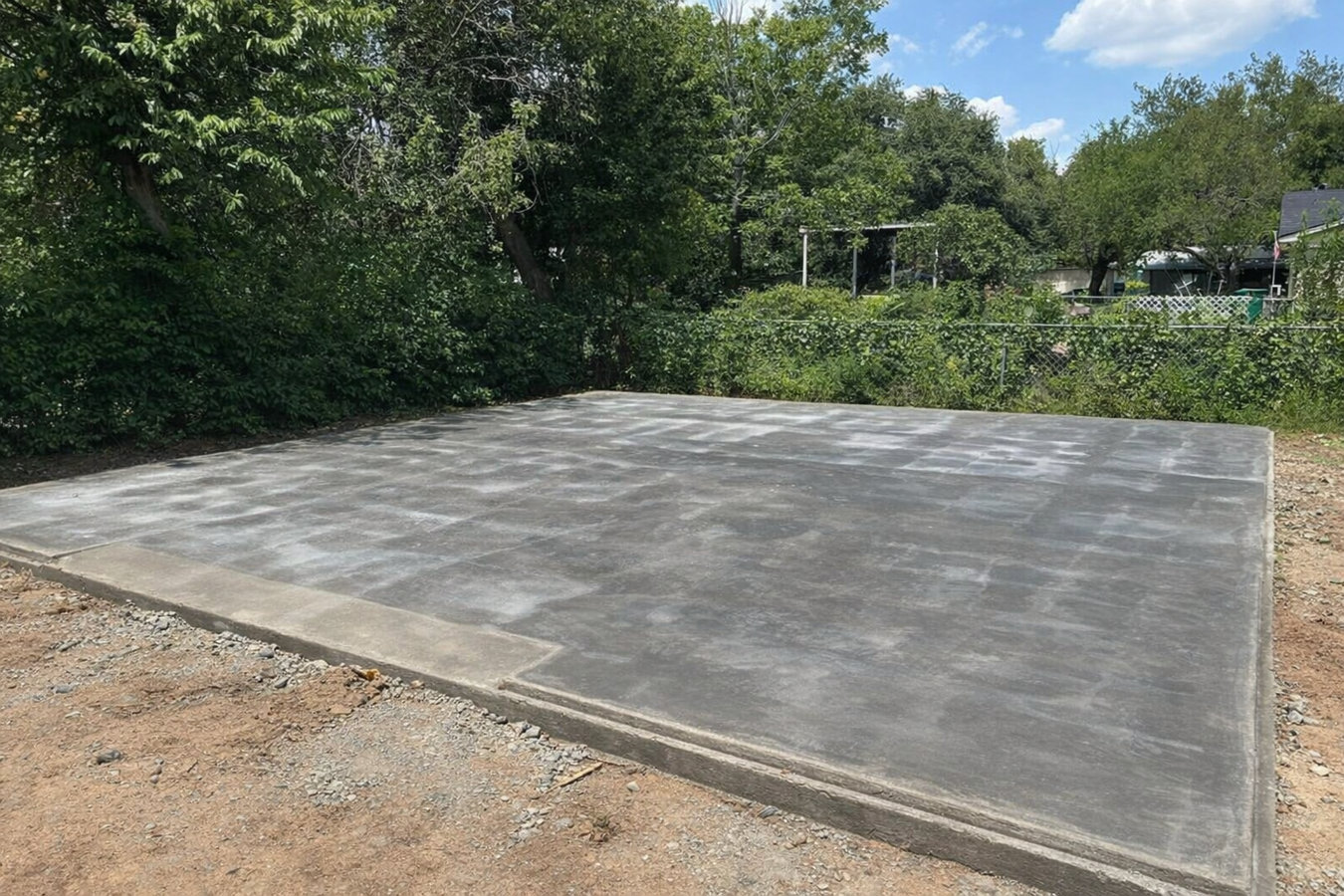
Your home sits on its foundation for decades - cracked concrete or poor drainage fixes itself. We build slab foundations in Fayetteville that are properly prepared, correctly reinforced, and ready for whatever gets built on top.
Slab foundation building in Fayetteville means compacting and leveling the site, laying a gravel drainage base, placing steel reinforcement, and pouring a single thick concrete layer that becomes both floor and structural base - most residential jobs take two to four active work days, with framing able to begin about a week after the pour once the concrete has set.
Slab foundations are the most common new-construction foundation type in Fayetteville today, and for good reason - they are durable, low-maintenance, and well-suited to the region when built correctly. The catch is that Northwest Arkansas has clay-heavy soil in many neighborhoods, and clay moves with moisture changes. A slab poured on unprepared ground or without adequate drainage can shift, crack, and cause costly problems years later. If your project also needs structural concrete footings for load-bearing points, that work is often sequenced alongside the slab pour.
The Portland Cement Association provides detailed guidance on slab-on-grade construction standards, including what separates slabs that last from ones that fail within a few years. We follow those standards on every Fayetteville pour, and so does any reputable concrete pad contractor working in any market.
If you are building a new home or addition in Fayetteville, the slab foundation is the first major step - everything else waits until it is in place. Delays at this stage push back framing, plumbing, and your entire project schedule. Getting the slab quote and permit process started early is the single most effective thing you can do to keep a new build on track.
Small surface cracks in concrete are common and usually harmless. But cracks wide enough to fit a coin into, or diagonal cracks running from door and window corners, often signal that the slab has shifted. In Fayetteville's clay-heavy soils, this kind of movement is more common than in areas with stable sandy soil, especially after a dry summer followed by heavy fall rains.
When a slab settles unevenly, the walls and door frames above it shift too. If doors that used to swing freely now stick at the top or bottom, or if gaps are forming between walls and the ceiling, the foundation below may be moving. The longer uneven settlement continues, the more expensive the fix tends to be.
Fayetteville's heavy spring rains can expose drainage problems quickly. If water consistently collects against your foundation after a storm rather than draining away, it is working against the concrete over time. In clay soils, persistent moisture causes repeated swelling and shrinking that stresses the slab from below - a grading or drainage correction now costs far less than a foundation repair later.
We pour residential and light commercial slab foundations across Fayetteville - new homes, additions, garage conversions, and accessory structures. Every slab we build includes site grading, a compacted gravel base for drainage, steel reinforcement, and a pour that is timed around the weather forecast. We coordinate with your plumber on the pre-pour rough-in, pull the required City of Fayetteville building permit, and schedule the pre-pour inspection so the concrete covers inspected work, not guesswork. For projects that require load-bearing depth at specific points, we tie the slab into concrete footings that anchor the structure to stable ground below the active clay layer.
Some jobs are straightforward pours on flat suburban lots. Others involve significant grading on hillside parcels in older Fayetteville neighborhoods. We handle both, and our estimate will tell you upfront what your specific lot requires. If your project will eventually involve a full foundation installation with crawl space elements or basement components, we can scope that work together so the concrete phases are coordinated rather than done in separate trips.
Best for new home construction and additions in Fayetteville where a slab-on-grade is specified by the builder or architect.
Suited for detached garages, workshops, and accessory buildings where a thinner slab suffices but proper drainage is still required.
Works for hillside Fayetteville parcels that require significant grading or stepped footing design before the pour can happen.
For homes or structures where an older, failed slab is being removed and replaced with a properly prepared, reinforced new pour.
Fayetteville has been one of the fastest-growing cities in Arkansas for over a decade, and that growth has pushed new construction onto hillier terrain around the city's edges. Lots near the University of Arkansas, in older central neighborhoods like Wilson Park and the Leverett Avenue corridor, and in newer subdivisions south of town all present different challenges - slope, soil type, drainage patterns, and existing utility lines all vary by location. Much of Washington County sits on clay-rich soil that shifts with the seasons, which means site preparation and drainage are not optional steps a contractor can skip to lower the bid. Clay soil slab failures that show up two or three years after a poor pour are among the most common and most expensive problems we are called in to assess. We also serve homeowners in Rogers where similar Washington County soil conditions and rapid development patterns create the same foundation challenges.
Fayetteville winters bring real freeze-thaw cycles - temperatures regularly swing above and below freezing between November and March. Concrete poured in hard freeze conditions can cure improperly and end up weaker than designed. Experienced local contractors schedule pours around the forecast, not around a calendar deadline. Spring and fall - roughly March through May and September through October - give the best curing conditions here. We also work across Bentonville and the wider Northwest Arkansas metro where the same conditions apply. For permit requirements specific to your project, the City of Fayetteville Building Safety Division is the right place to check before any concrete is poured.
We visit your Fayetteville property to assess the lot, check slope and soil conditions, and ask about your project plans. Site visits are free and usually take 30 to 60 minutes - we will not give you a firm number without seeing the lot first, because conditions vary too much across the city.
Once you approve the written estimate, we apply for the City of Fayetteville building permit. This takes a few business days to two weeks depending on the city's current workload - we handle all the paperwork so you do not have to contact the city yourself.
The crew grades the site, compacts the soil, lays the gravel drainage base, and sets the forms. Your plumber installs any under-slab piping before the steel reinforcement goes in. A city inspector reviews the reinforcement and plumbing before concrete is placed - this pre-pour inspection protects you.
Pour day typically runs four to eight hours for a standard residential slab. The crew finishes and smooths the surface, then the curing process begins. The slab needs about a week before framing can start, and reaches full strength over the following month. We give you a written timeline so your next contractor knows when they can begin.
We respond within one business day. No obligation, no pressure - just a straight answer on what your lot requires and what it will cost.
(479) 485-4698Washington County's expansive clay soil is one of the most common reasons Fayetteville slabs crack within a few years of being poured. We compact the subgrade, lay a proper gravel drainage layer, and use steel reinforcement designed for soil that moves - not a one-size-fits-all approach from a contractor who does not know the local ground conditions.
Every slab we pour in Fayetteville goes through the city's building permit and pre-pour inspection process. That means a licensed city inspector, not just our crew, verifies the plumbing and steel before the concrete covers it. You get a paper trail showing the foundation was built to code - which matters when you sell the home or make an insurance claim.
We have pulled permits and completed slab pours across Fayetteville's neighborhoods - from flat suburban lots in south Fayetteville to hillside parcels near the university. That local volume means we know which neighborhoods have drainage challenges, which inspectors to work with, and how to estimate accurately for local site conditions.
We have heard from Fayetteville homeowners who received a low quote that climbed once work started. Our written estimates break down grading, gravel base, reinforcement, the pour, and cleanup - line by line. If your lot requires extra grading or soil treatment, we tell you upfront. The American Concrete Institute's standards back our methods - see concrete.org for what industry-standard concrete work looks like.
Slab foundations are the one part of a home you cannot easily revisit after the fact. We take the preparation, permit, and pour seriously because we know the long-term costs of shortcuts fall on the homeowner, not the contractor. That is the standard we hold ourselves to on every Fayetteville job.
Full foundation installation for homes needing crawl space or multi-component concrete base work beyond a standard slab pour.
Learn morePoured concrete footings that anchor load-bearing points to stable ground below the active clay layer on Fayetteville lots.
Learn moreConcrete contractors in Northwest Arkansas book up fast in spring - the sooner you get a written estimate, the sooner you can lock in a pour date and keep your build on schedule.