Loading...
Serving Fayetteville, AR and surrounding areas. (479) 485-4698
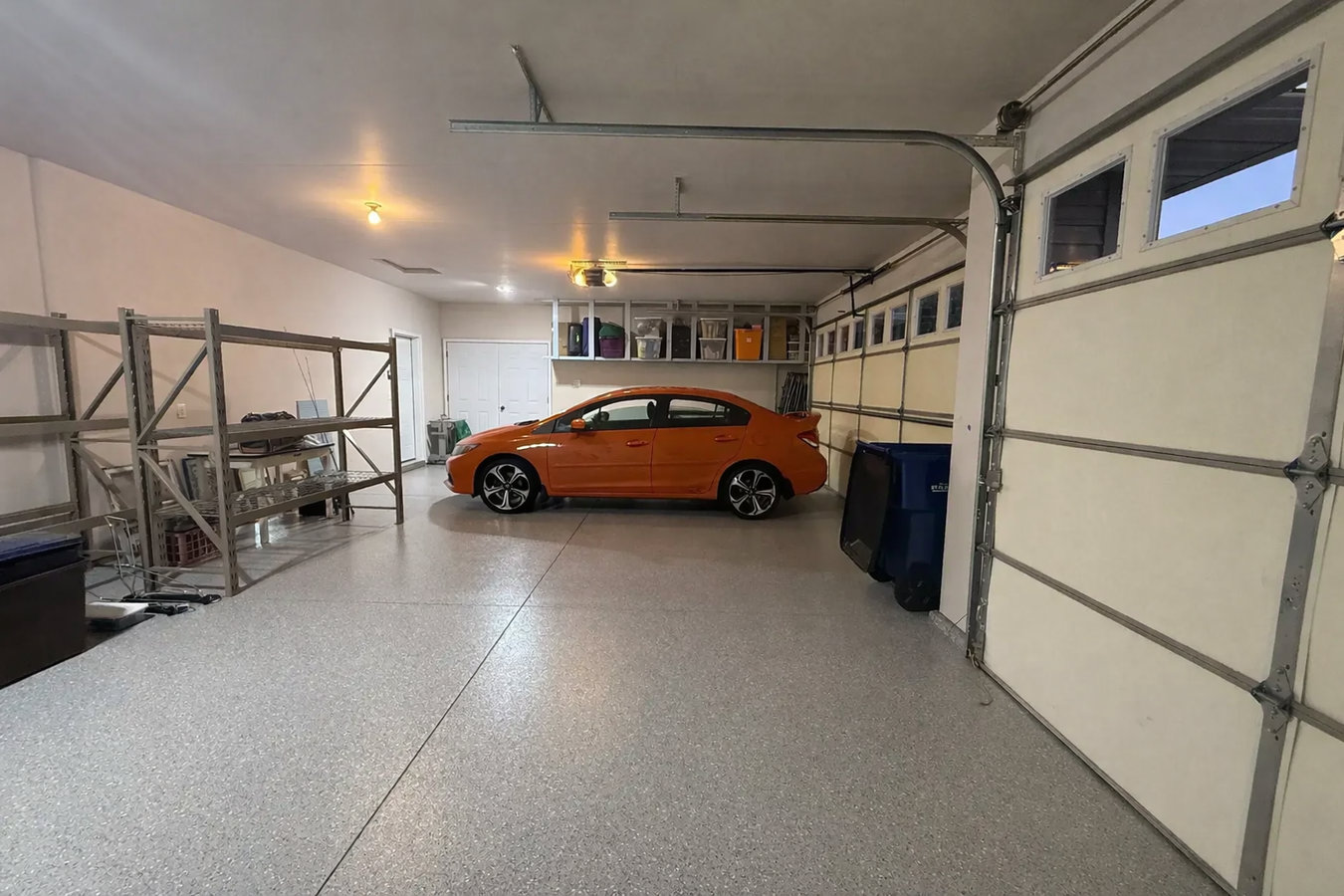
Cracked, flaking, or uneven? We replace and install garage floors in Fayetteville with the right mix and subgrade prep for local winters - no shortcuts, no guesswork.
Garage floor concrete in Fayetteville means removing the old slab if one exists, preparing and compacting the ground underneath, and pouring a fresh slab - most residential garage floor jobs take one to three days of active on-site work from demolition through the pour.
Most homeowners focus on the finished surface, but the subgrade preparation underneath is what determines how long that floor holds up. Fayetteville sits on variable ground - ranging from clay-heavy soil that shifts with moisture to karst limestone that can have voids beneath the surface. A contractor who does not assess the ground before pouring is taking a shortcut that will show up in cracking within a few years.
If you are looking to upgrade your garage floor's appearance, our decorative concrete service can add color, texture, or a polished finish to your new slab during the pour.
A hairline crack here or there is normal, but cracks that have grown since you moved in - or wide enough to catch a coin - signal the slab is moving or settling underneath. In Fayetteville, where soil can shift near limestone-influenced ground, cracks that grow are worth a professional look rather than a caulk fill.
If the top layer of your floor comes off in thin flakes or leaves a gritty powder on your shoes, the concrete is spalling. In Fayetteville, this is often caused by years of freeze-thaw cycles working on a slab that was not mixed to handle them - and once it starts, it gets worse each winter.
A properly poured garage floor slopes slightly toward the door so water drains out. If puddles form in the middle or near the walls, the floor was either poured without the right slope or has settled unevenly. Standing water accelerates surface deterioration and can seep under the slab.
If you feel a bump or dip walking across your garage, or your car rocks slightly when pulling in, the slab has settled unevenly. This can happen when soil underneath shifts - not uncommon in parts of Fayetteville with variable fill or karst-influenced ground. Uneven sections become trip hazards over time.
Every garage floor project starts with a free on-site visit. We assess the existing slab, check for settling or drainage issues, and evaluate the ground conditions before giving a final price. From there, we handle everything: demolition and concrete hauling, subgrade compaction and leveling, vapor barrier installation, and the pour itself. Standard residential garage floors are poured at four inches thick - enough for passenger cars and light trucks. Homeowners who park heavy trucks, RVs, or store heavy equipment get a five to six inch slab. We also cut control joints across the floor at the right spacing, which guides any future cracking to happen in predictable straight lines rather than randomly across your floor.
For homeowners who want to go further, we connect garage floor work with our decorative concrete options - including polished finishes and coatings that turn a plain gray floor into something you are not embarrassed to show. If you are also planning interior flooring in other areas of your home, our concrete floor installation service handles those projects with the same attention to base prep and finishing.
Four-inch slab with proper slope, control joints, and curing protection. Right for most residential garages.
Five to six inches thick for homeowners who park trucks, RVs, trailers, or run heavy equipment in the garage.
Polished, stained, or coated surface for homeowners who want a clean, finished look beyond standard gray concrete.
Fayetteville's winters bring real freeze-thaw pressure. Temperatures here regularly swing above and below freezing multiple times in a single week during January and February, and that repeated movement is one of the most common reasons garage floors start flaking and pitting within a few years of being poured. An air-entrained concrete mix - one with microscopic air pockets built in to absorb that expansion - matters more here than it would in a warmer Southern city. Many floors poured during the rapid growth of Fayetteville neighborhoods in the early 2000s did not use the right mix for this climate, and homeowners are now replacing them. The Portland Cement Association recommends air-entrained concrete for any surface exposed to freezing and thawing - it is not an upgrade here, it is the baseline.
Beyond the mix, Fayetteville's karst limestone geology means the ground beneath a garage can be unpredictable. Voids, soft fill, or shifting clay are all possibilities in different parts of the city. We serve homeowners across the region, including Springdale and Bentonville, and the same ground conditions that make Fayetteville projects require a site visit apply across Northwest Arkansas.
We ask a few basic questions about your garage size, whether you have an existing slab, and what you want to accomplish. We schedule a free on-site visit before giving you a firm price - conditions vary too much to quote accurately over the phone.
We check your existing floor, look for settling or drainage issues, and assess the ground conditions underneath. You get a written estimate that breaks down what is included. This is the right time to ask about thickness, drainage slope, and finish options.
We handle demolition of the old slab and haul the broken concrete away. The crew then compacts and levels the ground, installs a vapor barrier, and sets the forms. If a permit is required, we pull it on your behalf before work begins.
We pour the slab, finish the surface, and cut the control joints before the concrete sets. After the required curing period - no vehicles for at least seven days - we walk through the finished floor with you, confirm the drainage slope, and answer any questions.
Free on-site estimate. No obligation. We respond within 1 business day.
(479) 485-4698We use air-entrained concrete mixes on every outdoor and garage pour in this area. That means your floor is built to absorb the expansion from freeze-thaw cycles instead of flaking apart. It is the standard the Portland Cement Association recommends for any surface exposed to freezing temperatures - and it is the reason floors we pour hold up while nearby ones do not.
Fayetteville sits on variable ground - clay, fill, and karst limestone can all be under a single neighborhood. We assess the ground at your specific property before pricing the job, so there are no surprise charges after we start digging. You know what you are paying for before the first shovel goes in.
We hold a current Arkansas contractor's license, verifiable through the Arkansas Contractors Licensing Board. That license is a requirement, not a nice-to-have - it means you have recourse if something goes wrong, and it means we are accountable to state standards for how this work is done.
We have poured garage floors across Fayetteville, Springdale, Rogers, Bentonville, and eight other communities in the region. That local work record means we know the soil, the permit offices, and the climate conditions your floor will face - not just in general, but in your specific part of Northwest Arkansas.
The difference between a floor that lasts and one that cracks in three winters comes down to two things: what is in the mix and what is under the slab. We take both seriously on every job we pour in Fayetteville.
Add color, texture, or a polished finish to your garage floor or any outdoor concrete surface.
Learn moreInterior concrete floors for living spaces, basements, and commercial areas, poured and finished to spec.
Learn moreSpring and summer slots fill fast across Northwest Arkansas. Call today or submit a request and we will get back to you within 1 business day with a free, no-obligation estimate.