Loading...
Serving Fayetteville, AR and surrounding areas. (479) 485-4698
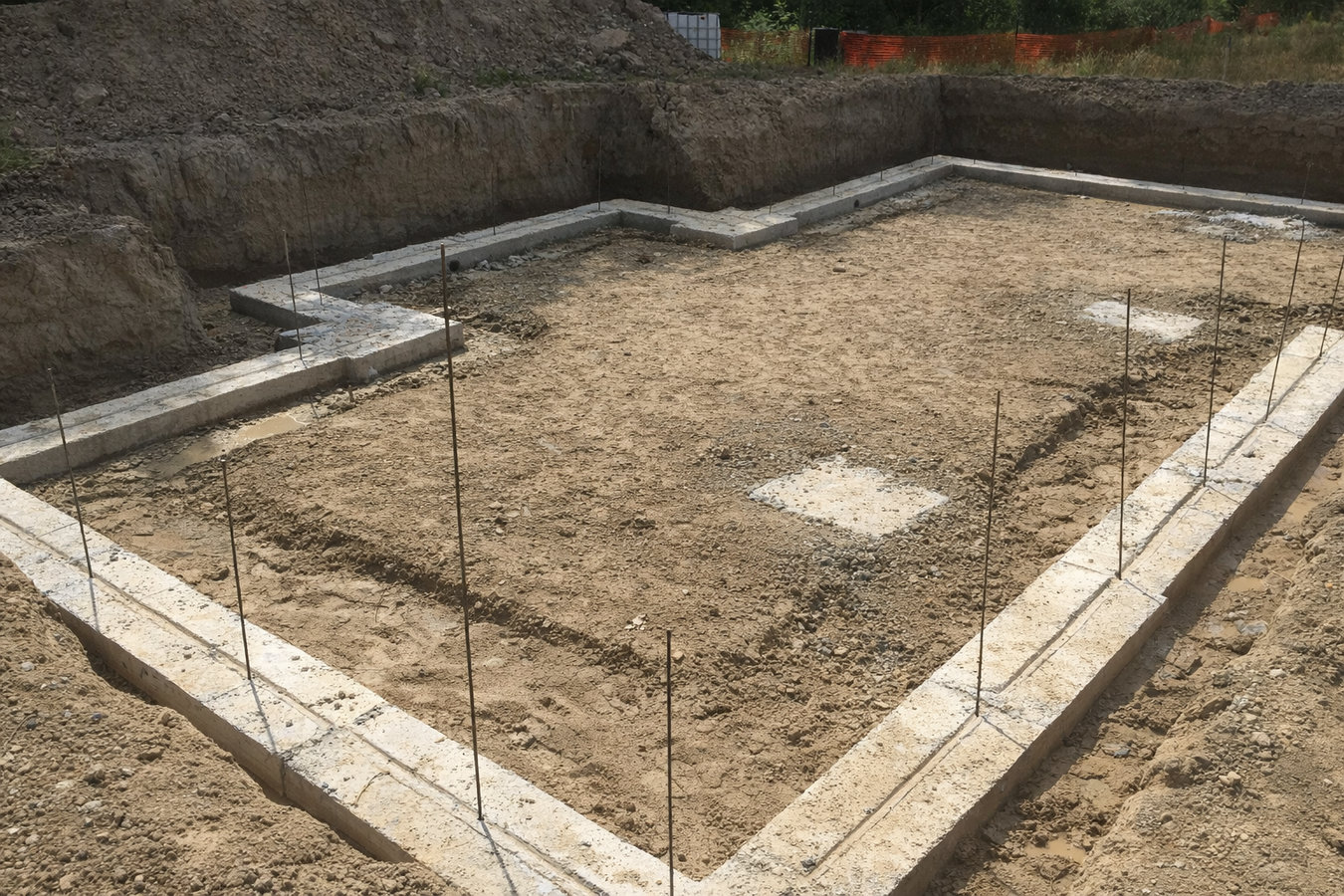
A deck that leans, an addition that settles, a porch that pulls away from the house - these problems almost always start below grade. We pour concrete footings in Fayetteville at the right depth and with city-required inspections, so whatever you build on top stays level for the long haul.
Concrete footings in Fayetteville are the underground concrete base that holds up any structure placed on top - decks, covered patios, additions, outbuildings, and new home construction. The crew digs holes or trenches to the required depth, sets temporary forms, pours the concrete, and lets it cure before framing begins. Most residential footing jobs take one to three days of active work, with curing requiring at least a week before loading the footings. From first call to ready-to-build, the full timeline including permits and city inspection is typically two to four weeks.
In Fayetteville, getting the depth right matters more than most homeowners realize. The frost line here is roughly 18 inches below the surface - a footing poured above that depth can be pushed up and down by freeze-thaw ground movement, and that movement shows up in your deck or porch within a few years. Fayetteville's Ozark Plateau geology adds another variable: the soil can shift from soft clay to solid limestone bedrock within just a few feet, which is why a site visit before quoting is not optional. If you are pairing new footings with a foundation installation or a larger structural project, we coordinate both scopes so the scheduling and permit timelines align.
The International Code Council sets the baseline standards for footing depth based on local frost conditions - Fayetteville adopts these standards through its local building code, and the city's inspectors verify compliance before any footing gets covered up.
If you can see a gap forming between your deck and your home's exterior wall, or the deck surface tilts noticeably to one side, the footings may have shifted or settled. This is especially common in Fayetteville's older neighborhoods where original footings were poured shallow or without adequate soil preparation. A leaning deck can become a safety issue quickly - do not wait to have it looked at.
When a footing settles unevenly, the structure above shifts too - and the first place you usually notice it is in doors or windows that suddenly do not open and close smoothly. Cracks running diagonally from the corners of door or window frames are a classic sign that something below is moving. If this is happening in a room that was added onto the original house, the addition's footings are the first thing to investigate.
Any new structure that will be attached to your home or carry significant weight needs proper footings before anything else is built. In Fayetteville, this includes detached garages, covered patios, and large pergolas in some cases. Starting the project without addressing the footings first is the most common reason these structures fail within five to ten years.
Northwest Arkansas gets significant rainfall, and water that pools near your home's foundation can erode the soil around existing footings over time. If you have noticed water collecting against your foundation wall after storms - particularly the heavy spring rains common in this region - it is worth having a contractor assess whether the footings are still sitting in stable, well-supported ground.
We pour concrete footings for residential decks, covered patios, home additions, detached garages, outbuildings, and new construction throughout Fayetteville. Every job starts with a site visit before we quote, because the soil conditions on your property - whether clay-heavy, rock-close to the surface, or somewhere in between - determine what the dig will require and what the true cost will be. We call 811 before any digging starts, handle the permit application with the City of Fayetteville, and coordinate the city inspection that has to happen before the footing is covered. If your project also involves a full foundation installation, we can manage both under the same scope and timeline.
For homeowners in Fayetteville's established neighborhoods - areas like Wilson Park, the Dickson Street corridor, and Hillcrest - many original footings were poured under older standards that allowed shallower depths than what is required today. If you are adding onto an older home or replacing a deck on a property built before the 1980s, we assess the existing footings as part of the planning process. In some cases they can carry the new load; in others, new footings need to go in alongside the project. Knowing that before framing begins saves time and money. We also build foundations and handle foundation raising where the existing structure has already begun to settle.
Suited for new decks, covered porches, and deck replacements where existing footings do not meet current depth requirements - we assess first so there are no surprises mid-project.
For room additions, garage conversions, and any structural extension to your home that needs new footing support before framing begins.
Works for detached garages, workshops, storage buildings, and larger pergolas - structures that need a stable underground base even though they are not attached to the main house.
For ground-up builds where the footing is the first element of the project - we coordinate with your builder's schedule and handle all permit and inspection requirements.
Fayetteville sits on the edge of the Ozark Plateau, and the ground here does not behave the same way from one lot to the next. In parts of the city - particularly on the north side near Lake Leatherwood and on the hillside streets west of campus - you can be digging through clay and hit solid limestone bedrock within a foot or two. Rocky soil requires heavier equipment and more time. In other parts of Fayetteville, especially the southern and western neighborhoods developed in the 1990s and 2000s, the soil profile is more consistently clay-heavy. Clay expands when it absorbs water - and Fayetteville averages around 47 inches of rain per year - and then shrinks back during dry spells. That cycle puts upward pressure on anything built on top of it, which is exactly why footing depth and soil preparation matter so much here. Homeowners in Bentonville and Rogers face the same geology, and we approach every site with the same assessment-first discipline.
Fayetteville's active permit enforcement is the other local factor that shapes how footing work gets done here. The city's Building Safety division requires permits for structural concrete work and sends inspectors to verify depth and placement before the footing is covered. This is actually good news for homeowners: it means there is an independent check on the work before it disappears underground. Fayetteville's rapid growth over the past decade has put significant demand on the building department, which means permit timelines can run a week or two - building that time into the project schedule from the start keeps things on track. The City of Fayetteville Building Safety division is the right place to confirm current permit requirements for your project type.
We come to your property before quoting - Fayetteville's mix of clay and Ozark rock varies too much to price over the phone. We assess the soil and access conditions, discuss the scope, and give you a written estimate. You will hear back from us within one business day of your initial contact.
We handle the permit application with the City of Fayetteville's Building Safety division and call 811 to have underground utilities marked before any digging starts. Plan for permit processing to add roughly one to two weeks to the start date.
The crew digs to the required depth, sets up temporary forms, and a city inspector verifies the depth and placement before the concrete is poured. This inspection step is what the permit is for - and it is the check that protects your investment.
After the pour, the footings need at least seven days to cure before framing begins - longer in cooler weather. We leave the site clean with forms removed and the area ready for the next phase of your project. The permit documentation stays on file.
We visit your property before we quote, handle the city permit, and coordinate the required inspection - so the work is done right and on record.
(479) 485-4698Fayetteville's soil varies from clay-heavy flats to near-surface Ozark bedrock - sometimes within the same block. A quote given without seeing your property is a quote that will change once digging starts. We visit every site first so the number you agree to is the number you pay.
The frost line in Fayetteville is around 18 inches below grade. Every footing we pour in this region goes to that depth or deeper - so freeze-thaw ground movement does not work its way up into your deck or addition frame over the first few winters. This is the detail that separates a footing that lasts from one that causes problems.
Fayetteville's Building Safety division requires an inspection before footings are covered. We handle the permit application, schedule the inspection, and make sure the city signs off on the depth and placement before we pour. You get documentation that the work passed - not just our word for it.
Arkansas law requires contractors to call 811 before any digging starts so underground utility lines get marked. We do this as a standard part of every job - and we confirm the marks are in place before the crew picks up a shovel. It is a legal requirement and a genuine safety step that protects your property and our crew.
Footing work is the part of any project that disappears underground - which makes it easy for contractors to cut corners where you cannot see them. The city inspection we schedule on every permitted job is the independent check that confirms the work meets local standards before it gets covered up.
When an existing structure has already started to settle, foundation raising can lift and stabilize it - often avoiding a full foundation replacement.
Learn moreFull foundation work for new construction and additions - poured on properly prepared ground with all city permits and inspections handled.
Learn moreSpring books fast in Northwest Arkansas - reach out now to lock in your date and get a written estimate before the season fills up.