Loading...
Serving Fayetteville, AR and surrounding areas. (479) 485-4698
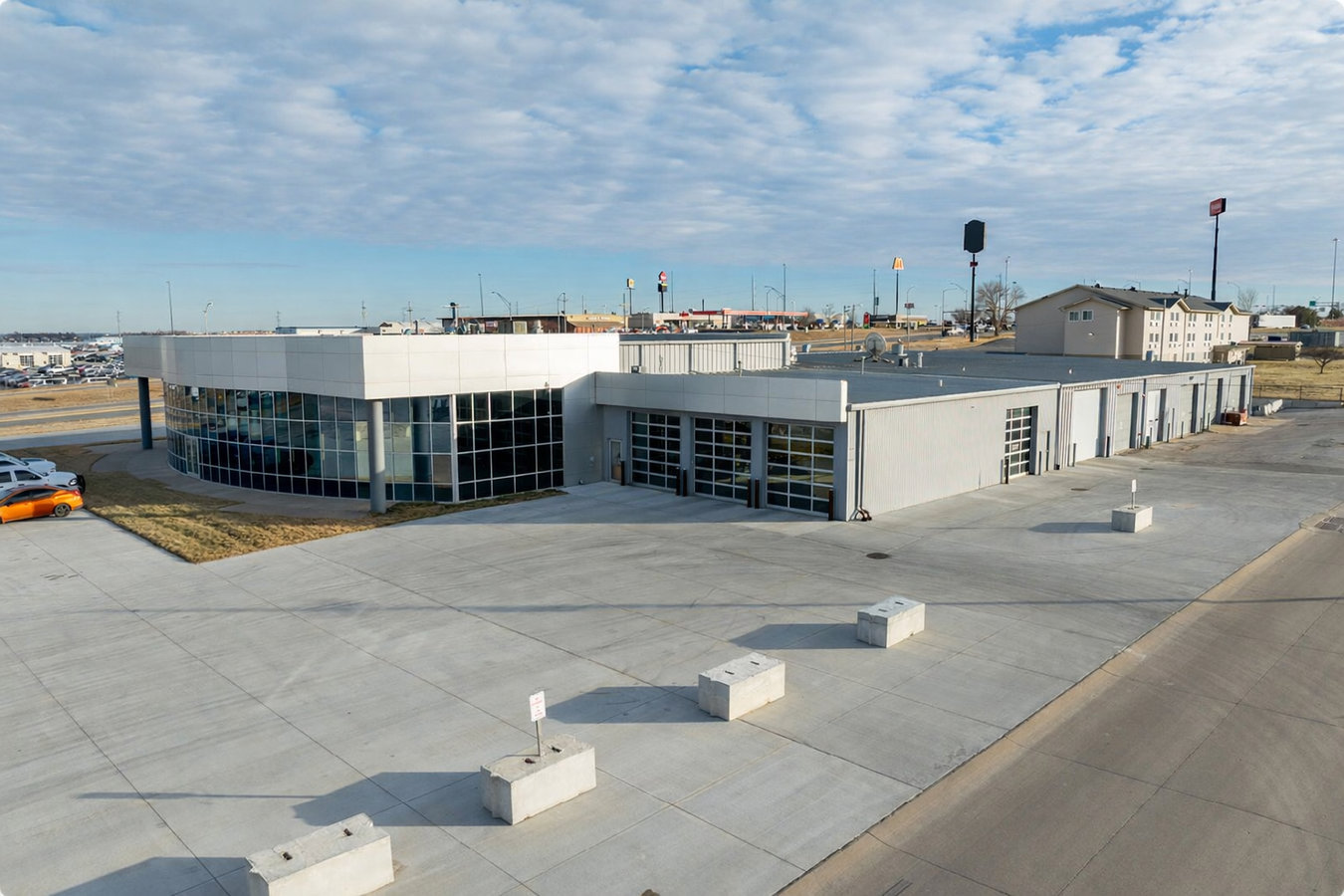
A crumbling, puddling, or unpaved parking area costs you in safety, maintenance, and property value. We build concrete parking lots in Fayetteville on a properly prepared base - so the surface drains correctly and holds up through Northwest Arkansas winters for decades.
Concrete parking lot building in Fayetteville starts with site excavation and a compacted gravel base, then a concrete pour at the right thickness for the load the lot will carry - most residential and small commercial jobs take one to two weeks from mobilization to when you can drive on the surface, with the concrete reaching full strength over 28 days after the pour.
The most common reason parking lots fail early is not the concrete itself - it is what was done, or not done, to the ground underneath before the pour. Fayetteville sits on expansive clay soil that moves with moisture changes, and that movement breaks down any slab that was not built on a stable base. We handle the full process, from permit application through final walkthrough, so you are not managing multiple contractors or tracking down paperwork on your own. If you are also considering a concrete driveway as part of the same project, combining the work saves on mobilization and often results in a better price per square foot.
The American Concrete Pavement Association publishes guidance on base preparation, thickness specifications, and control joint placement - the three factors that matter most in how long a parking surface holds up.
If you can see cracks wider than roughly a quarter inch, or chunks of pavement that have shifted, patching will not hold for long. In Fayetteville's freeze-thaw winters, water gets into those cracks, freezes, expands, and widens the damage significantly each season. At that point, a full replacement is usually more cost-effective than repeated repairs.
Standing water after a storm means the surface no longer drains the way it should. Fayetteville spring rain is among the highest in Arkansas, and pooling water is not just an inconvenience - it accelerates surface deterioration and creates a slip hazard. A new concrete lot can be graded correctly from the start to solve this problem permanently.
If you currently have a gravel lot, a dirt area, or an unpaved section you want to use for parking, concrete is the most durable long-term solution. Gravel shifts, creates dust, and washes away in Fayetteville's heavy spring rains. A concrete surface eliminates those problems at once and adds to the property's usable value.
Many properties in Fayetteville's older commercial corridors have asphalt lots that are well past their 15 to 20 year lifespan. If your surface is crumbling at the edges, showing widespread cracking, or has soft spots that sink under vehicle weight, replacing it with concrete gives you a surface that will last two to three times as long with less ongoing maintenance.
We build concrete parking lots for homeowners, landlords, and small commercial property owners across Fayetteville. Every project starts with a thorough site assessment, because the base preparation requirements here differ from lot to lot depending on existing ground conditions. We excavate to the required depth, install and compact a crushed gravel base layer, and pour the concrete at the thickness appropriate for the load the lot will carry. Control joints are cut within the first day or two of the pour to guide any natural cracking into clean, predictable lines. If you are paving a surface adjacent to a building, we can coordinate with any concrete footings or structural work already on the schedule.
Drainage grading is built into every job. A concrete lot that pools water is a sign the drainage slope was not done correctly - we grade every surface so water moves off and away from the building rather than sitting and seeping in. We also handle the full permit process with the City of Fayetteville when one is required. For projects that include a nearby concrete driveway, combining the scope is usually more efficient than two separate mobilizations. For commercial properties near Dickson Street or the Wedington Drive corridor, we understand the added traffic load requirements and spec the pour accordingly.
Best for property owners paving a gravel, dirt, or unpaved area for the first time - includes full base excavation, grading, and a properly specified pour from the ground up.
Suited for lots where aging asphalt is past its useful life and the owner wants a surface that will last decades rather than requiring resurfacing every 10 to 15 years.
For homeowners or small business owners adding additional paved parking spaces alongside an existing structure - we match thickness and drainage to the original lot where possible.
Handles properties where the city requires a formal site plan and permit - we manage the submission, coordinate the inspection, and deliver documentation of completed work.
Fayetteville's combination of clay soils, freeze-thaw winters, and heavy spring rainfall creates a more demanding environment for parking surfaces than most of the country. Washington County clay expands when it absorbs moisture and contracts when it dries, which pushes upward on anything built on top of it. Contractors who do not account for this during excavation and base preparation end up with customers calling them back about cracked and shifting lots within a few years. Freeze-thaw cycles compound the problem: water seeps into surface pores, freezes, expands, and chips the surface from the inside out over successive winters. Fayetteville's active growth has also raised enforcement expectations - the city's Development Services department actively reviews permit applications for new paving projects, and skipping that process creates real risk if you ever sell the property. Homeowners in Rogers and Springdale face the same clay-soil and freeze-thaw conditions, and we build to the same standards across the full region.
The University of Arkansas and a growing commercial corridor along Dickson Street and Wedington Drive have driven consistent demand for parking surfaces that hold up under regular vehicle traffic. Lots serving customers, tenants, or employees need to be specced for that load from the start - a parking lot that works for two vehicles per day is not necessarily built for 20. Understanding that difference before the pour is part of getting the project right. The City of Fayetteville Development Services department is the right starting point for understanding permit requirements for your specific parcel.
We come to your property to measure the area, assess ground conditions, and discuss how the lot will be used. You receive a written estimate breaking out site preparation, materials, and labor separately - no vague totals.
We determine whether a permit is required and handle the application with the City of Fayetteville. This step adds roughly one to two weeks to the timeline but protects your investment long-term. You will hear back from us within one business day of your initial contact.
The crew removes any existing surface or vegetation, excavates to the correct depth, brings in crushed gravel, and compacts it with heavy equipment. This step is what separates a lot that lasts 40 years from one that cracks within five.
Concrete trucks arrive and the surface is poured, leveled, and finished with the correct texture for safe footing in wet weather. Control joints are cut within the first day or two. Plan on keeping vehicles off the surface for at least seven days after the pour.
We visit your property before we quote. No surprises on the invoice - just a clear breakdown of exactly what the project will cost.
(479) 485-4698Washington County clay shifts with every rain and dry spell. We excavate properly, bring in compacted gravel, and build the base before a single yard of concrete is poured. Contractors who skip this step cost you more in repairs than you saved on the original job.
The city actively enforces paving permit requirements, and unpermitted work creates real complications at sale. We handle the application and coordinate any required city review - so the documentation exists and the job is on record as done correctly.
Concrete naturally cracks as it cures and with temperature changes. We cut planned control joints within the first 24 to 48 hours of every pour to guide any cracking into clean, straight lines. A parking lot without proper joints almost always develops random cracking within a few years.
Arkansas requires contractors above a certain project threshold to hold a state license - verifiable through the{' '}Arkansas Contractors Licensing Board. Confirming a contractor's license before signing anything is a two-minute check that protects you from unlicensed work.
Every parking lot we build in Fayetteville is specced for the actual load it will carry and the actual soil conditions on your property. That approach is why our work holds up through the kind of winters and wet springs this region delivers every year.
Structural footings for decks, additions, and new construction - poured at the correct depth to keep everything above them stable through Fayetteville's freeze-thaw cycles.
Learn moreNew residential driveways built on compacted base material with proper drainage slope and control joint placement - the same approach we bring to parking lots.
Learn moreConcrete work in Northwest Arkansas books out fast in spring and fall - reach out now to hold your spot on the schedule and get a written estimate before prices change.